SaaS Development Services UK: The Complete 2026 Guide for B2B Founders

What Are SaaS Development Services?
SaaS development services are the specialist engineering, design, and infrastructure disciplines required to build, launch, and scale a Software-as-a-Service product. Unlike general web development, SaaS development services address the specific technical challenges that make SaaS products fundamentally different from static websites or bespoke internal tools: multi-tenant architecture, subscription billing, continuous deployment, and the need to serve thousands of isolated customers from a single codebase.
For UK B2B founders evaluating providers in 2026, understanding what SaaS development services actually include — and what they do not — is the difference between a successful product launch and a six-figure rebuild eighteen months later. This guide covers every major service category, what competent delivery looks like, and how to budget for each phase.
The Core SaaS Development Service Categories
1. Architecture and Technical Discovery
Every serious SaaS development services engagement should begin with a structured discovery phase before a single line of production code is written. This phase produces three deliverables: a system architecture document covering tenant isolation strategy, data model, and integration map; a technology stack decision record explaining why specific frameworks and infrastructure choices were made; and a cost band (not a single number) with a milestone structure tied to testable outcomes. UK B2B founders should treat any SaaS developer who wants to skip straight to coding as a red flag — the architecture decisions made in week one determine the rebuild cost in year two.
2. Multi-Tenant Backend Development
Multi-tenancy is the defining technical characteristic of SaaS products and the area where generalist web development shops most frequently fail. A properly architected multi-tenant backend isolates each customer's data using row-level security at the database layer (PostgreSQL RLS is the standard approach for mid-market B2B SaaS), scopes every API endpoint to the authenticated tenant automatically, and implements permission models that support complex organisational hierarchies — enterprise buyers frequently require role-based access control down to the object level. Specialist SaaS development services providers will have implemented these patterns across dozens of products; generalist agencies will figure them out on your budget.
3. Subscription Billing and Revenue Infrastructure
Billing is consistently underestimated in initial SaaS development budgets and consistently overruns. A complete SaaS billing implementation using Stripe covers: product and pricing catalogue setup, multiple pricing model support (flat-rate, per-seat, usage-based, tiered), trial-to-paid conversion flows, dunning and failed payment recovery, upgrade/downgrade/cancellation workflows, invoice generation and VAT handling for UK businesses, and usage metering if the product charges by consumption. SaaS development services that treat billing as a bolt-on produce products that cannot flex pricing without engineering intervention — a serious constraint on growth-stage experimentation.
4. Frontend SaaS Application Development
SaaS frontend development is different from agency web design in two important ways. First, SaaS applications are persistent — users return daily and navigate a complex information architecture rather than browsing a marketing site. This means component architecture, state management, and performance under real data loads matter far more than visual polish. Second, SaaS frontends need to support the permission model implemented in the backend — UI elements render or hide based on the authenticated user's role and plan tier. SaaS application development services that use Next.js and React are currently the most common approach for UK B2B products; they offer server-side rendering for SEO-sensitive marketing pages and rich client-side interactivity for the application itself.
5. API Development and Third-Party Integrations
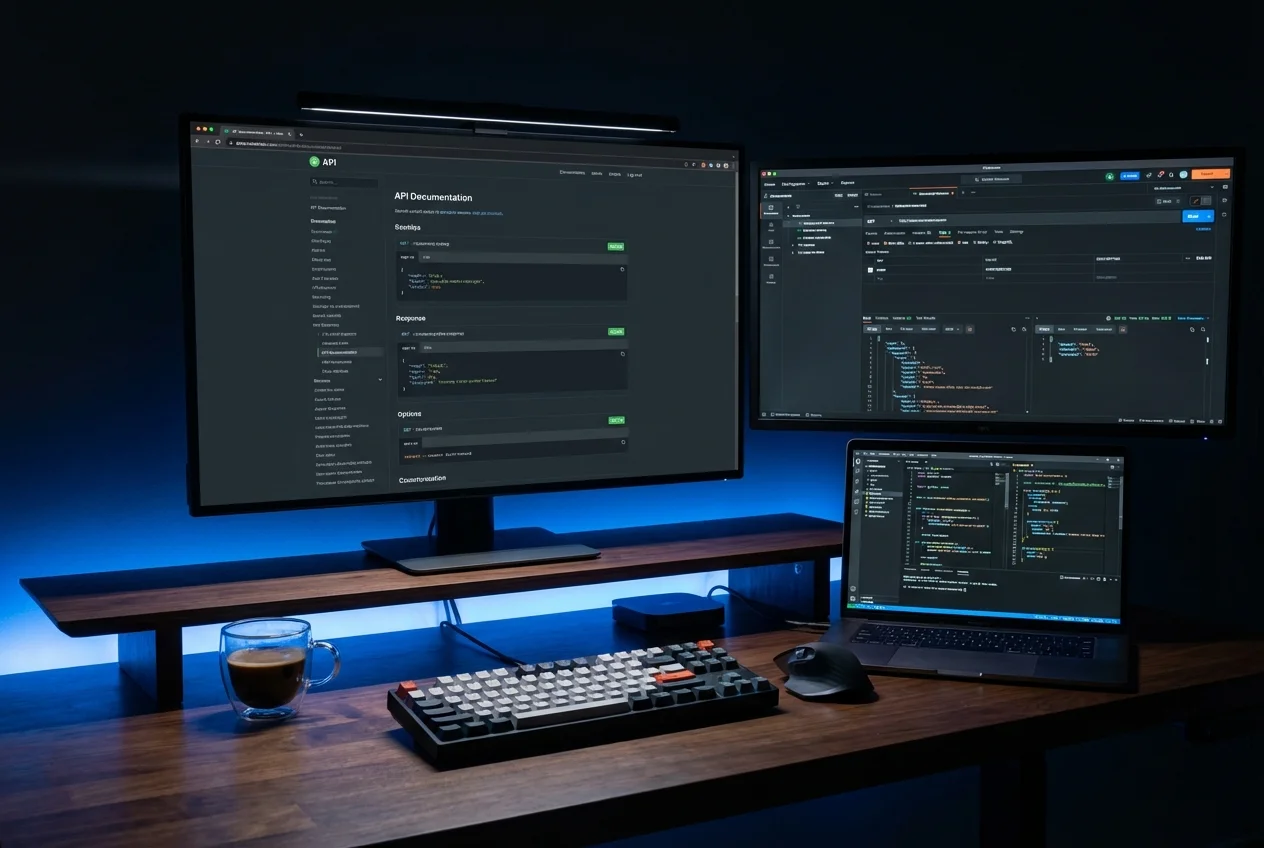
Most B2B SaaS products live inside an ecosystem of existing tools — CRM, ERP, communication platforms, payment processors, analytics stacks. SaaS development services therefore almost always include API development: designing and building REST or GraphQL APIs for the product itself, plus integrating with external APIs that the product depends on. Contract-first API design (writing the OpenAPI spec before the implementation) significantly reduces integration bugs and makes it easier to onboard third-party developers later. Our API development service covers this in detail.
6. DevOps, Cloud Infrastructure, and CI/CD
SaaS products require production infrastructure that can scale horizontally, recover from failures without manual intervention, and deploy new versions without downtime. SaaS development services for infrastructure typically cover: cloud account setup and IAM configuration (AWS, GCP, or Azure), containerisation (Docker, Kubernetes for scale-out deployments), CI/CD pipeline setup (GitHub Actions, CircleCI), environment management (development, staging, production), database migration strategies, and monitoring and alerting setup. UK B2B SaaS products that handle personal data also need infrastructure configured for GDPR compliance — audit logs, data residency controls, and encryption at rest. See our DevOps and cloud service for more.
7. Ongoing Support and Product Iteration
SaaS development services do not end at launch. A production SaaS product requires security patching, dependency updates, performance monitoring, and continuous feature development in response to customer feedback. The most effective post-launch model for early-stage B2B SaaS is a retained engineering team on a monthly basis, giving the founding team predictable capacity for feature work without the overhead of full-time hiring. UK SaaS development services providers that offer a post-launch retainer with a named senior engineer are preferable to those that hand off to a support tier staffed by junior developers.
How to Evaluate SaaS Development Services Providers in the UK
Portfolio Quality
Ask to see three to five live multi-tenant B2B SaaS products built in the last two years. The best signal is products you can visit, create an account on, and explore — not case study PDFs. Look for evidence of the specific challenges your product faces: complex permission models, usage-based billing, real-time data, or specific integration categories. A SaaS development services provider whose portfolio shows only marketing websites or simple CRUD applications is not equipped for serious SaaS product development.
Technical Interview Quality
Before selecting a SaaS development services partner, have a senior engineer on their team walk you through how they would approach your specific architecture challenges. A genuinely experienced provider will give concrete, opinionated answers — they will tell you why they would use row-level security rather than application-layer tenant filtering, why they would use Stripe's price objects rather than custom billing logic, and what migration strategy they would use to move your existing data to a new schema. Vague or generic answers indicate the company is selling project management capacity, not SaaS engineering expertise.
Engagement Structure
SaaS development services engagements should be structured around milestones with clear acceptance criteria — not monthly retainers with indefinite scope. A fixed-price discovery phase (typically four to six weeks) produces a technical specification and cost band for the full build. The build phase should be broken into two to four week sprint milestones with demo deliverables. This structure protects UK B2B founders from scope creep and ensures the development team is accountable for progress. Read our SaaS development agency engagement guide for the full commercial framework.
SaaS Development Services Pricing in the UK (2026)
UK SaaS development services pricing varies significantly based on team seniority, engagement structure, and product complexity. Broadly, the market breaks into three bands. Offshore-first agencies (India, Eastern Europe) typically charge £30–£80/hour for senior engineers but add significant coordination overhead for UK B2B founders; realistic all-in costs for a six-month MVP are £80,000–£150,000. UK-based generalist agencies charge £100–£180/hour and are appropriate for marketing sites or simple applications, but often lack multi-tenant SaaS experience. UK specialist SaaS development services providers charge £120–£200/hour for senior engineers, deliver faster (lower coordination cost) and with fewer architecture surprises; a complete B2B SaaS MVP typically runs £120,000–£220,000 depending on integration complexity.
The critical insight is that the cheapest SaaS development services rarely produce the cheapest SaaS products — architecture mistakes made at MVP stage regularly cost £50,000–£150,000 to fix at scale. For a detailed cost breakdown, read our SaaS development cost guide.
Common SaaS Development Services Mistakes (and How to Avoid Them)
The most common mistake UK B2B founders make when procuring SaaS development services is confusing general web development capacity with SaaS product expertise. SaaS products have specific architectural requirements — multi-tenancy, billing, continuous deployment — that require genuine pattern experience, not generic software engineering. The second most common mistake is under-specifying the billing and permission model in discovery, leading to expensive rebuilds when the first enterprise customer asks for SAML SSO or the first pricing experiment requires a usage-based tier. The third mistake is selecting a provider based on a low initial quote without validating what architecture decisions have been deferred to achieve it. Our SaaS architecture mistakes guide documents the most expensive patterns to avoid.
Next Steps: Getting SaaS Development Services Right
If you are in active evaluation of SaaS development services in the UK, the most valuable first step is a structured technical discovery session with a provider who can challenge your assumptions, not just validate them. Our senior engineering team offers a free architecture scoping call where we review your product concept, identify the three to five architecture decisions that will define the product's scalability, and produce a realistic cost band for the full build. Book a free consultation to start the conversation. For a broader look at how to select the right partner, read our UK SaaS platform development company buyers guide.
 Custom SaaS Development
 Web App Development
 API Development